Introduction
Art and technology have always been intertwined. From the invention of perspective in Renaissance painting to the development of photography in the 19th century, every technological advancement has expanded the boundaries of artistic expression. Today, however, the fusion of art and technology is unfolding at a scale and speed unprecedented in history. Digital tools, artificial intelligence, augmented reality, and blockchain are not just reshaping how art is made—they are redefining how it is shared, owned, and experienced.
In the 21st century, creativity no longer resides solely in studios and galleries. It exists in virtual worlds, on digital platforms, and within immersive environments. Artists are becoming programmers, and programmers are becoming artists, blurring the line between human imagination and machine innovation. This convergence raises new possibilities, but also profound questions about authorship, authenticity, and the future of creativity.
A Historical Relationship Between Art and Technology
The relationship between art and technology is not new. Ancient civilizations used innovative tools to carve stone, mold metal, and mix pigments. The Renaissance was defined by the marriage of artistic genius and scientific inquiry, as artists like Leonardo da Vinci bridged painting, engineering, and anatomy. The Industrial Revolution introduced mass production and photography, both of which transformed art’s role in society.
The 20th century saw even more radical shifts. The invention of film created an entirely new medium. The rise of digital technologies in the late 20th century gave birth to video art, digital installations, and computer-generated imagery. Each technological step not only provided new tools but also expanded the very definition of art.
Today’s innovations are the continuation of this long history. What makes the current moment unique is the degree to which technology is not just a tool but an active partner in creativity.
Digital Tools as Artistic Mediums
Digital technologies provide artists with new mediums that go beyond traditional canvas or sculpture. Software like Photoshop, Illustrator, and Blender allows for limitless experimentation. Virtual reality (VR) enables immersive environments where viewers can step inside artworks, while augmented reality (AR) overlays digital layers onto physical space.
Generative art, created through coding and algorithms, is perhaps the clearest example of this fusion. Artists write programs that produce visual forms, often yielding results the creator themselves could not predict. In this way, the creative process becomes a dialogue between human intent and machine autonomy.
Artificial Intelligence and Creative Collaboration
Among the most transformative developments is artificial intelligence. AI systems trained on massive datasets can generate paintings, music, poetry, and even 3D sculptures. Tools like MidJourney and DALL·E allow users to create striking images from text prompts, democratizing access to visual creativity.
Far from replacing artists, AI is often seen as a collaborator. Artists use it to generate ideas, explore variations, and push boundaries. For example, Refik Anadol’s data-driven installations transform massive datasets into immersive visual experiences, blending computation with aesthetics. AI introduces unpredictability, expanding the creative process by offering results that challenge human imagination.
Yet, AI also raises pressing questions. Who owns the rights to AI-generated works? Can machines be considered artists, or are they merely tools? These debates underscore the complex ethical terrain that accompanies technological innovation.
Blockchain and the Question of Ownership
Technology is not only changing how art is created but also how it is owned and distributed. Blockchain, the technology underlying cryptocurrencies, has given rise to NFTs (non-fungible tokens). NFTs allow digital artworks to be authenticated, bought, and sold in ways that preserve uniqueness and provenance.
For artists, this opens new revenue streams and direct connections with collectors. For audiences, it creates opportunities to engage with digital art as a legitimate collectible. However, the NFT boom also revealed pitfalls: environmental concerns, speculative bubbles, and the challenge of distinguishing meaningful art from hype-driven assets. Still, blockchain’s potential to transform ownership and access remains a powerful force shaping art’s future.
Immersive Experiences and New Audiences
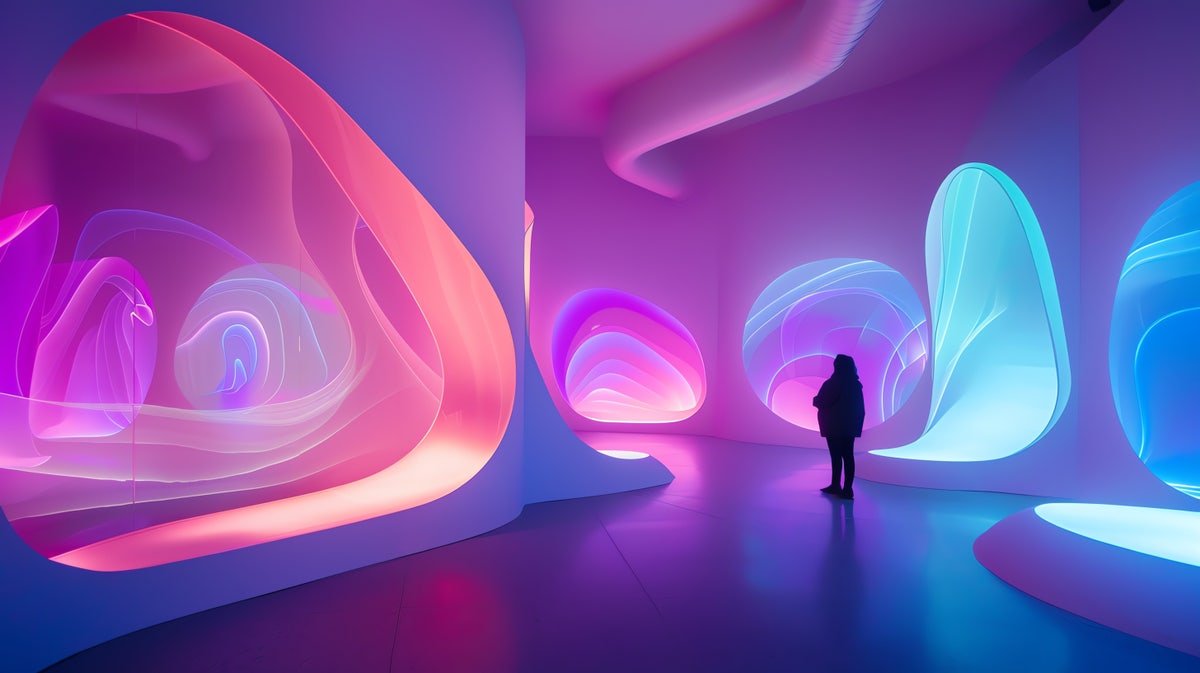
Another significant impact of technology is the creation of immersive art experiences. Digital installations using projection mapping, soundscapes, and interactivity invite audiences to step inside works rather than merely observe them. Exhibitions such as teamLab’s interactive environments or Van Gogh immersive shows demonstrate how technology can turn art into a multisensory experience.
This shift also changes the audience itself. Younger generations, raised on digital interaction, expect art to be participatory and shareable. Social media amplifies this trend, as artworks become part of global conversations. The fusion of art and technology not only transforms artistic creation but also reshapes how audiences engage with it.
The Democratization of Art Through Technology
One of the most profound outcomes of this fusion is democratization. In the past, access to art was often limited by geography, wealth, or education. Digital platforms now allow anyone with an internet connection to view, share, and even create art. Free or affordable tools empower individuals with little training to experiment creatively.
This democratization, however, comes with challenges. The sheer volume of digital content raises questions about quality and value. Yet, it also ensures that voices historically excluded from traditional art institutions can now find platforms. Technology, therefore, is both a great equalizer and a disruptor.
Challenges and Ethical Dilemmas
While the fusion of art and technology opens new horizons, it also introduces dilemmas. Issues of intellectual property become more complex when digital works can be infinitely replicated. The reliance on algorithms raises concerns about bias and the erasure of marginalized voices. Moreover, the environmental cost of technologies like blockchain cannot be ignored.
These challenges remind us that technology is not neutral. The way it is used, governed, and integrated into art will determine whether it enriches or undermines creativity. Artists, technologists, and policymakers must work together to navigate this terrain responsibly.
The Future of Art and Technology
Looking forward, the fusion of art and technology promises even more radical possibilities. Advances in AI could lead to real-time collaborative artworks between humans and machines. Holographic and metaverse platforms may allow artists to create entire worlds rather than singular pieces. Biotech and neuroscience could open new artistic frontiers, from brainwave-generated art to living installations.
In this future, the definition of art will continue to expand. What remains constant is the human drive to create and to use tools—whether brushes, cameras, or algorithms—to express imagination. Technology will not replace this drive; it will amplify it.
Conclusion
The fusion of art and technology is not a temporary trend but a fundamental shift in creativity. It expands mediums, democratizes participation, and challenges long-held ideas of ownership, originality, and authenticity. At its best, it brings together the precision of machines with the imagination of humans, producing works that neither could achieve alone.
Tomorrow’s creativity will be defined by collaboration—between artists and engineers, between humans and machines, between the physical and the digital. In this convergence, art does not lose its humanity; it gains new dimensions. The canvas grows larger, the palette more complex, and the possibilities limitless.